
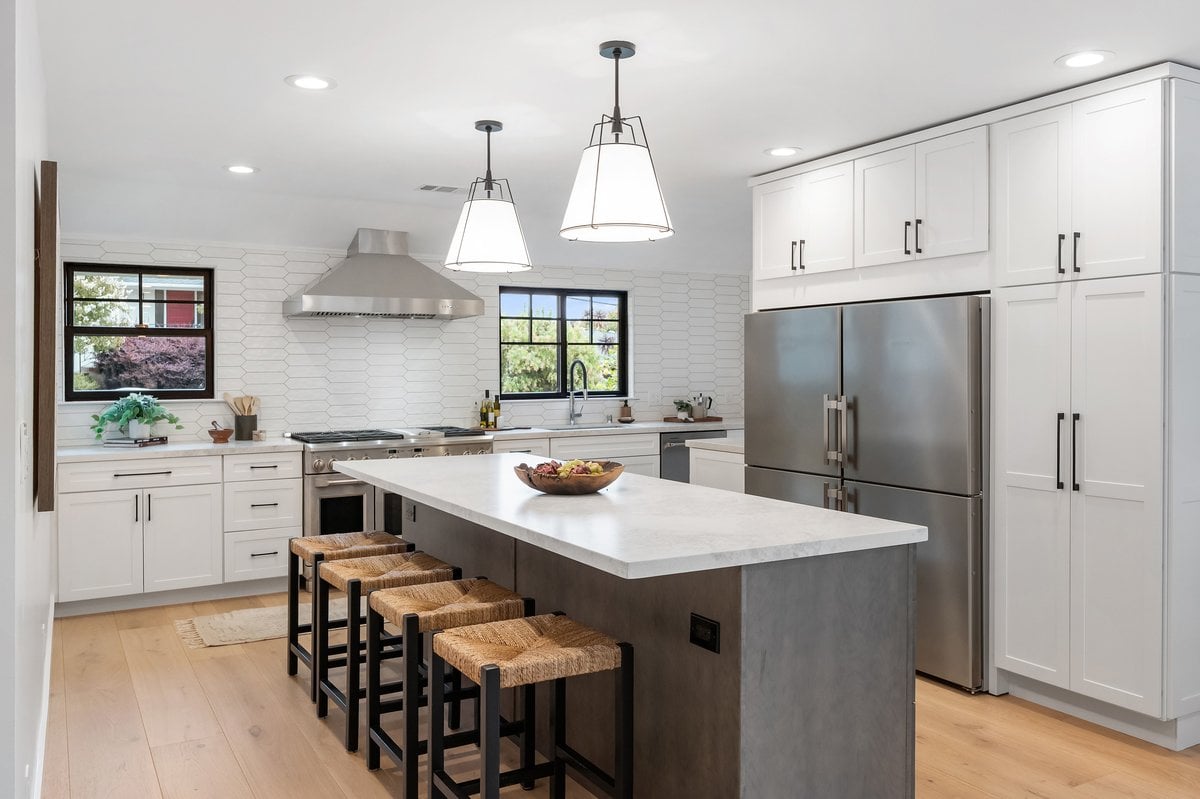
What Countertops Are Telling Buyers
The material, color, and finish choices that move buyers - and the ones that stop them - in 2026 East Bay kitchens
If you watch closely, visitors at open houses often touch the counter first. Not the cabinets, nor the appliances. There’s something about that surface. I see countertops not simply as decoration, but as information delivered before a buyer has consciously formed an opinion about anything else in the room.
What Countertops Actually Communicate
A kitchen can have excellent bones, good layout, decent light, solid cabinetry, and still lose a buyer at the counter. More than almost any other surface in a home, the counter can tell a buyer when a kitchen was last taken seriously. Floors can be original and charming. Walls can be repainted in an afternoon. But countertops are expensive and disruptive enough to replace that most owners only do it when they mean it.
That doesn’t mean every dated counter should be replaced before selling. The question is whether the countertop is holding back an otherwise appealing kitchen - or whether it is simply one part of a kitchen a future owner might remodel anyway.
What’s Moving Buyers Right Now
Quartz, though recently a top choice, is now being overtaken by porcelain as a material buyers respond to across Berkeley, Oakland, and Piedmont kitchens. The shift isn’t just about durability, it’s also about finish. Honed and matte surfaces have increasingly replaced the high-gloss look that dominated the last decade. A softer sheen reads as considered rather than showy, which matters in a market where buyers are often looking for a home that feels lived in well, not simply staged.
Pattern has shifted too. The stark white-with-gray-veining look that felt inevitable for years is giving way to warmer tones: creams, soft taupes, and subtle movement that echoes natural stone. In older East Bay housing stock, a Craftsman in Rockridge or Temescal especially, that warmth tends to sit more honestly alongside original woodwork than a cold white slab ever did. The counter stops competing with the house and starts belonging to it.
Waterfall edges and thicker slab profiles are also showing up more in higher-end renovations across the Oakland and Berkeley hills, particularly where a large kitchen opens directly into living space. A counter that reads as substantial, not just clean, can support a sense of quality throughout the whole main level.
What Stops Them
The categories that give buyers pause are fairly predictable, and I hear the hesitation in almost the same language every time. Laminate, even in good condition, can read as unaddressed rather than intentional. Busy granite - the heavily patterned styles that were everywhere in the early 2000s - can date a kitchen more specifically than almost any other single choice. Yellowing or heavily veined granite in particular often reads as tired, even in a kitchen that has otherwise been well cared for.
This isn’t really about the material being wrong, it’s about what the material says regarding timing. A busy granite counter doesn’t just look dated. It can tell a buyer this kitchen hasn’t been revisited in twenty years, and that reading spreads. Once a buyer starts wondering what else in the kitchen - or the house - hasn’t been revisited, the hesitation compounds.
When Leaving the Counter Alone Is the Better Choice
There is an important exception. Prep work should make sense within the larger context of the home.
If the existing kitchen feels appropriate to the house - perhaps older, but coherent, functional, and well maintained - a new countertop isn't automatically an improvement. Sometimes an older kitchen simply belongs to an older home, and buyers understand what they're seeing.
And if the kitchen really needs a larger remodel, replacing only the countertops can be money poorly spent. New counters won't necessarily change a buyer's overall impression if the cabinets, layout, lighting, appliances, and finishes are all pointing toward a future renovation. Worse, a seller can spend thousands installing a surface the next owner removes six months later.
The useful question isn't Are these countertops dated? It's Will changing them materially change how buyers experience the kitchen - and the home?
Why This Matters More Than People Expect
This is the same logic that shows up throughout prep work generally. Doubt has a cost, and small unaddressed details can introduce doubt that has nothing to do with whether a home is actually sound. A dated counter doesn’t mean bad plumbing or old wiring. But it can make a buyer start doing math they weren’t planning to do, and that math rarely works in the seller’s favor.
At the same time, prep shouldn't become renovation for renovation's sake. The goal is to identify the improvements that change a buyer's experience of the home and leave alone the ones that don't.
Bottom Line
Countertops were never really about trend. They’re about context.
In the right kitchen, replacing a dated counter can remove a surprisingly powerful point of hesitation and make the entire room feel current again. In another, the existing counter may fit perfectly well within the larger story of the house. And when a kitchen clearly calls for a more substantial remodel, a new countertop alone may accomplish very little.
The right decision isn't always to replace it. It's knowing whether the counter is actually the problem.
-Alex
